Social Analytics editors
The Social Analytics editorial team maintains this independent reference against named primary sources.
Editorial standards
- No paid placements. We do not accept payment for a placement, a ranking or a favourable review. Where a link earns a commission, the page carrying it says so.
- No untested claims. We do not say we have tried something we have not. Prices and plan details supplied by a provider are labelled as indicative rather than presented as our own findings.
- No page for the sake of a keyword. A destination gets a page when there is something specific to say about it. That is why the site is small.
- Corrections are made in public. A factual fix is applied to the page and the update date changes with it.
31 pages by Social Analytics editors
-
 Social Media Reporting Framework for Decision-Ready Metrics
A social media reporting framework ties every metric to a business question, shows change and uncertainty, and removes any chart without a named decision owner.
-
 Video Completion Rate Meaning: Platform View Thresholds and Video Length
Video completion rate depends on what counts as a view. Platforms use 2-3 second thresholds; meaningful views use 15 seconds, creating a 3-10x gap.
-
 What Belongs in a Social Media Dashboard for Operators and Executives
A social media dashboard needs an operational layer for the team and a strategic layer for decision makers, with every chart tied to a named decision owner and labelled for data latency.
-
 How Often Social Media Reports Should Be Updated by Decision Type
Match social media reporting frequency to decision cadence: daily for operators, weekly for marketing leads, and monthly or quarterly for executives, not to real-time data availability.
-
 How to Explain a Social Media Metric Change With Decomposition and Evidence
To explain a social media metric change, decompose the metric into its components, compare against a relevant cohort, and check for platform definition changes before attributing cause.
-
 What Makes a Social Media KPI Useful for Business Outcomes
A useful social media KPI connects a controllable action to a business outcome, specifies a time horizon, and has a named decision owner who can act on it.
-
 How to Show Uncertainty in Social Analytics Reporting
Show uncertainty in social analytics reports using ranges, caveats, and sensitivity analysis rather than false precision, and remove any chart without a decision owner.
-
 Social Media Metrics: Platform Definitions, Denominators and Data Rules
Every social platform defines metrics differently. This hub states the rules: name the platform and date, show the denominator, never compare unlike metrics.
-
 Social Media Attribution and Experiments Hub
Social media attribution requires stating the causal design, window, and blind spots—no method delivers precise user-level attribution, and each answers a different question.
-
 Social Media Engagement Rate: Reach vs Impressions as the Denominator
Engagement rate divides interactions by reach or impressions. The denominator choice changes the number materially; native platforms default to reach.
-
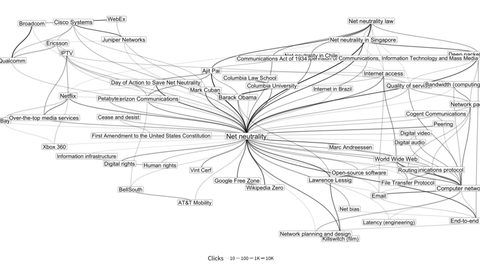 Reach vs Impressions: Platform Counting Methods and Duplication Explained
Reach counts unique users; impressions count total displays. Platforms count them differently—Meta uses pixel thresholds, X counts any serve—so cross-platform comparison is invalid.
-
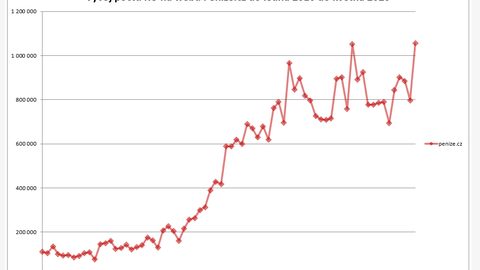 Which Follower Metrics Matter: Stock, Flow, Quality and Business Relevance
Follower count is vanity; net change, audience quality, and engagement ratio matter. Demographic data is modelled from a subset, not census-level.
-
 Why Social Platform Metrics Change: Definitions, Deduplication and Privacy
Platform metrics change due to product updates, privacy rules, and API deprecations. Historical data may be retroactively recalculated against new definitions.
-
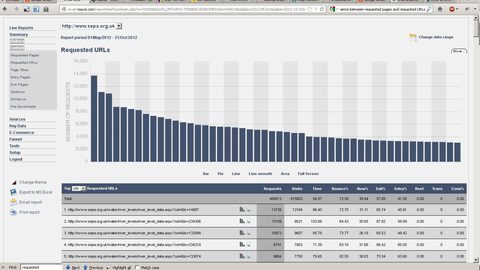 How to Audit Social Media Content Without Causal Fallacies
A social media content audit inventories posts, applies a taxonomy, and groups outcomes by comparable cohorts—without claiming one post's performance predicts another's.
-
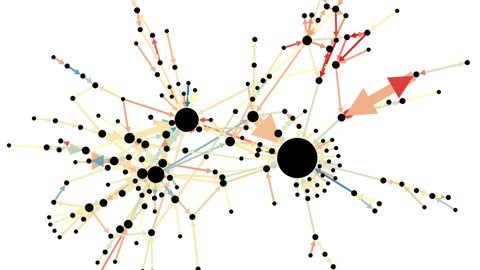 Can Social Media Sentiment Analysis Be Trusted
Social media sentiment analysis is a probabilistic classifier, not a measurement—validate vendor scores against human-coded samples before trusting trends.
-
 How Social Media Attribution Works Across Models and Windows
Social media attribution models assign conversion credit by rules and windows—platform self-attribution, GA4, and experiments each answer a different question.
-
 What UTM Parameters Are and How to Govern Them Durably
UTM parameters are the five-parameter URL tagging convention for social attribution—govern them with a controlled vocabulary to prevent data fragmentation in GA4.
-
 How to Measure Dark Social Traffic Without Precise User Tracking
Dark social traffic cannot be measured precisely, but you can estimate it by correlating direct-traffic spikes with social posting cadence and running on-site referral surveys.
-
 How Social Media Lift Tests Measure Incremental Impact
A social media lift test isolates incremental impact by comparing a holdout group against an exposed group, typically revealing platform attribution overstates contribution by 30-60%.
-
 Why Social Media Analytics Tools Report Different Numbers
Social media analytics tools disagree because of differences in metric definitions, time zones, identity resolution, cookie consent loss, and API data completeness—not errors.
-
 Social Analytics Guide: What It Actually Measures and How to Use It
A platform-aware reference connecting social media metrics to business decisions while making uncertainty, privacy costs, and data provenance visible.
-
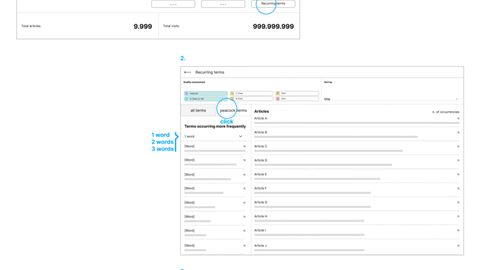 Social Content Analysis: Cohort Methods, Distribution Effects and Causal Limits
Content analysis requires comparable cohorts, distribution accounting, and restraint from causal claims. Listening and monitoring serve different scopes.
-
 Social Analytics Privacy and Data Access Governance
The privacy and data access governance hub for social analytics, covering GDPR, CCPA, API limits, vendor assessment, and the public-private data boundary.
-
 How to Tag Social Posts for Analysis Without False Precision
Design a social media content tagging scheme with mutually exclusive categories, documented definitions, and a governance process that prevents taxonomy drift.
-
 What Makes a Social Media Benchmark Fair and Comparable
A fair social media benchmark matches platform, audience, format, period, and distribution—not just the metric—and treats vendor datasets as biased samples.
-
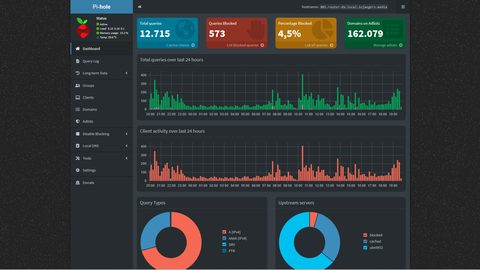 How to Identify Evergreen Social Content Without Paid Confusion
Evergreen social content sustains organic reach beyond the 48-hour decay window—identify it by isolating organic from paid reach over 12 weeks minimum.
-
 What Personal Data Can Social Analytics Tools Contain
Map the identifiers, content, and inferred data that can constitute personal data in social analytics, from handles and device fingerprints to sentiment scores.
-
 Do Social Analytics Need Consent Under GDPR and CCPA
Whether social analytics need consent depends on jurisdiction, purpose, and data source—distinguish first-party native analytics from third-party listening.
-
 How Should Social Analytics Data Be Retained and Deleted
Retain social analytics data based on purpose and minimisation principles, distinguishing between raw identifiable data and aggregated anonymised reports.
-
 What Are the Limits of Social Media APIs for Analytics
Social media APIs are constrained by rate limits, access tiers, data completeness gaps of 5-15%, and policy changes that can remove access without notice.
-
 How to Evaluate a Social Analytics Vendor for Privacy and Security
Evaluate a social analytics vendor on data access legitimacy, security certifications, export granularity, deletion controls, and verifiability of claims.